The Question Most VCs Don’t Ask Their Fund Administrator
February 17, 2026

Most fund managers don’t spend a great deal of time thinking about their fund administrator. They review the website, sit through a demo, speak to a reference or two, and move forward. In strong markets, that approach rarely feels problematic. Capital is flowing, reporting goes out on schedule, and nothing appears visibly broken.
Infrastructure, however, is not tested in good markets. It is tested when conditions tighten — when fundraising slows, investor scrutiny increases, and operational systems are pushed beyond what they were originally designed to handle. That is when the more important question emerges:
Will this firm still be here in five or ten years?
It is a simple question, but it reframes the evaluation entirely.
Durability Is Often Ignored — Until It Matters
In venture capital and private markets, managers apply rigorous diligence to portfolio companies. They examine runway, capital structure, downside protection, and long-term sustainability. Yet that same scrutiny is rarely applied to the firm responsible for maintaining the fund’s books and investor reporting.
Continuity risk is not theoretical. Administrators may be aggressively scaling, venture backed, or pricing below sustainable levels to win market share. In expansionary cycles, this may go unnoticed. In contractions, those structural decisions become visible very quickly.
Durability is not about marketing claims or brand visibility. It is about whether the business model is stable, whether pricing reflects long-term sustainability, and whether the organization has navigated difficult market environments before. Those realities tend to surface at precisely the moment managers least want operational uncertainty.
Having grown alongside venture, private equity, hedge, and alternative managers across multiple market cycles, Formidium has seen firsthand how operational fragility surfaces — and how durable architecture prevents it.
Technology Reveals More Than Marketing
A fund administrator’s technology stack often reveals how the firm actually operates.
Are workflows unified within a single system of record, or assembled across disconnected tools? Are controls embedded into the accounting architecture, or applied manually at the end of a process? How much of the core workflow depends on spreadsheets?
Spreadsheets themselves are not inherently problematic. They are powerful tools. The issue arises when dependency replaces architecture. Manual reconciliations, version control inconsistencies, and process workarounds introduce fragility that may remain invisible until scale or stress exposes it.
Technology, when thoughtfully integrated, reduces this fragility. It supports consistent data flow, embedded controls, and audit readiness. It allows human judgment to operate within structured systems rather than compensating for structural gaps.
Those distinctions become more meaningful as funds grow.
Scaling Changes the Equation
Scaling a fund introduces complexity that extends far beyond portfolio construction. As assets under management increase, so do cybersecurity exposure, reporting obligations, billing intricacies, and regulatory oversight. Processes that felt efficient at smaller scale begin to strain.
Growth is positive, but it also applies pressure to infrastructure. Weaknesses that once seemed manageable compound over time. Operational strain does not usually arrive dramatically; it accumulates gradually until it becomes disruptive.
Experience scaling operational platforms has shown that expansion must be matched with structural discipline. Sales momentum without operational maturity creates hidden vulnerabilities. Sustainable scaling requires systems that were built with growth in mind from the outset.
Infrastructure Is Quiet — Until It Isn’t
Operational infrastructure rarely receives credit when markets are strong. It runs in the background, largely unnoticed. Yet during periods of volatility or contraction, it becomes immediately visible.
Managers who treat fund administration as long-term architecture — rather than as a transactional service — tend to navigate those cycles with greater stability. The difference is not branding. It is durability, discipline, and structural integrity.
The question most managers do not ask is often the one that matters most. Not whether the administrator has the right logo or the lowest fee, but whether the underlying foundation will hold through multiple market cycles.
In private markets, funds are built for the long term. The systems supporting them should be built with the same horizon in mind.
Watch the Full Conversation
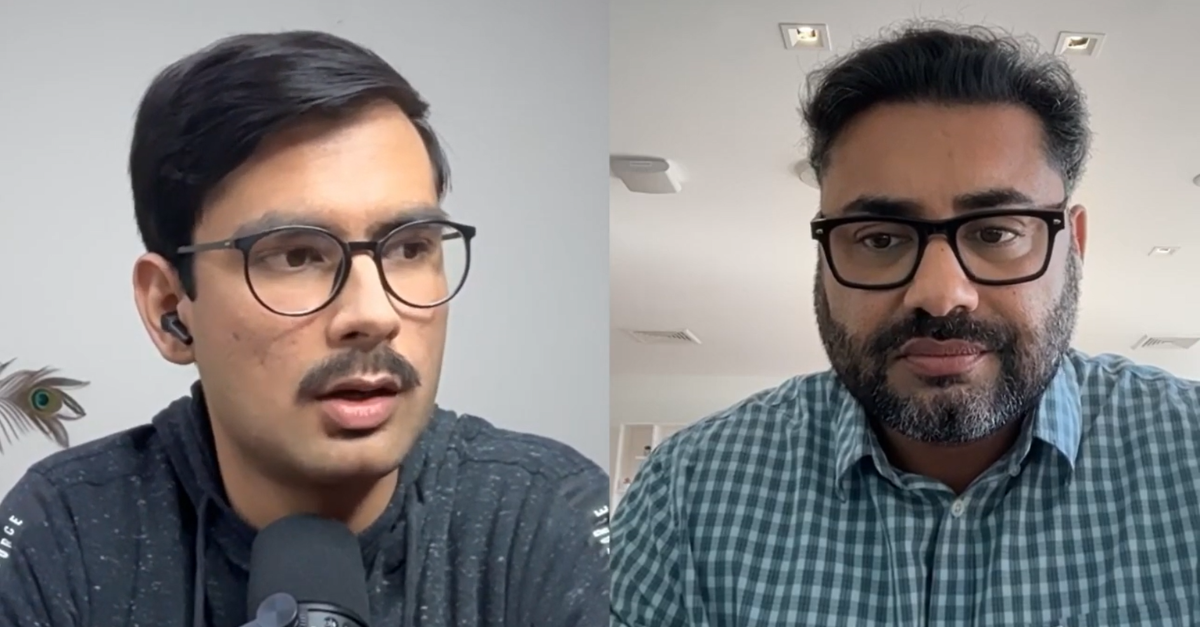
These themes were explored in greater depth in a recent VC10X discussion, covering continuity risk, technology discipline, and the operational realities of scaling responsibly.